

At many workplaces, coffee, water, and ice come from separate providers, each with its own agreement, service schedule, and point of contact. Those arrangements usually took shape one at a time as the company grew, and each one does its job.
What many decision-makers don't know is that one partner can run all three as a single program. This post covers what a combined program includes, what changes with one provider, and where consolidating makes sense and where it doesn't.
What a combined program covers
A combined program brings the three amenities people use most often through the work day under one service plan.
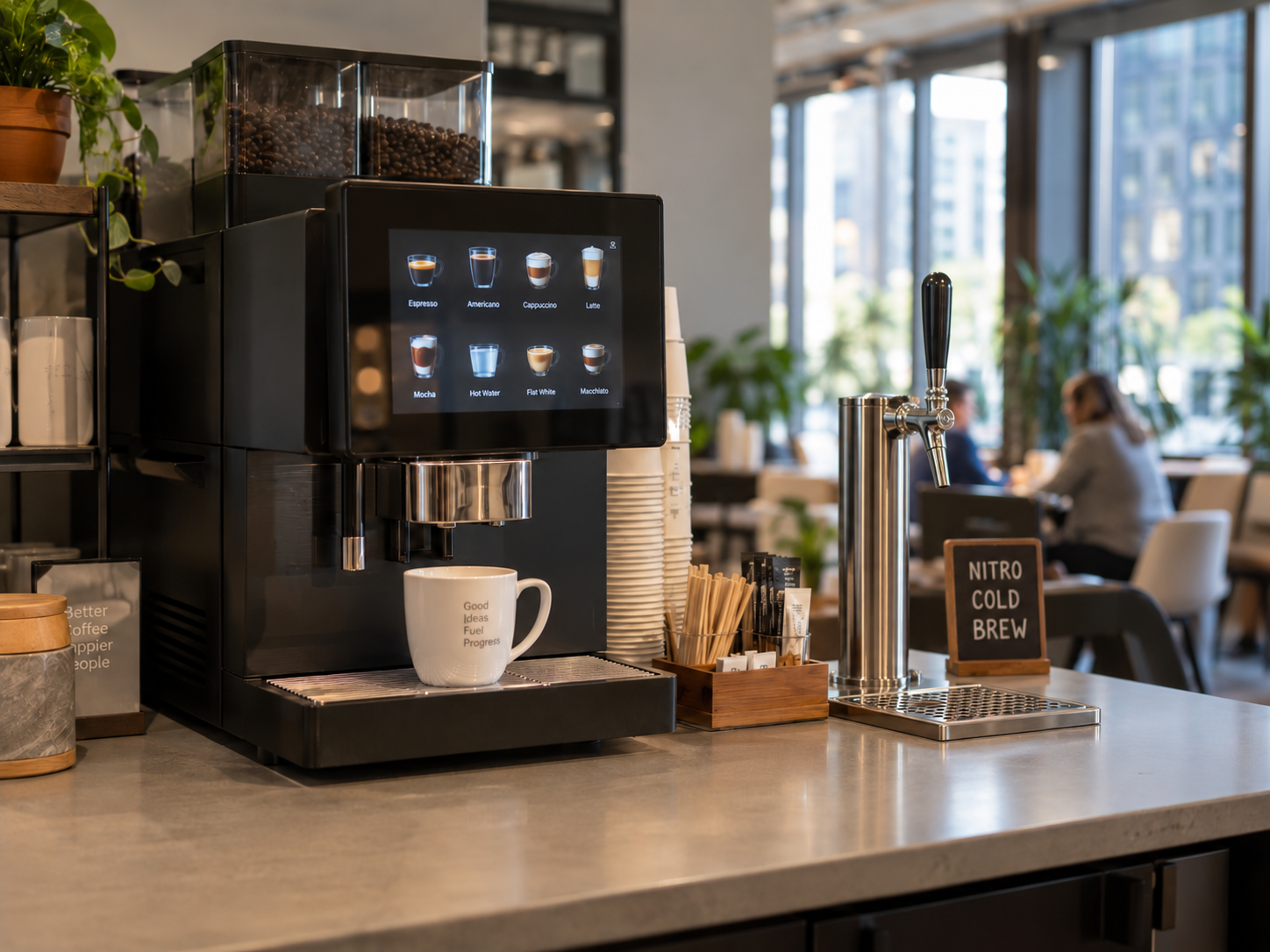
Coffee. Gourmet coffee and espresso-based drinks, from a fresh cup of drip to cappuccinos and mocha lattes, along with tea, creamers, and cups. Brewer cleaning and maintenance are part of the service.
Filtered water. Dispensers placed in each break area and work zone that needs one, with filter changes and sanitizing on a set schedule.
Chewable ice. Ice machines that pair with the water service and are maintained on the same visits.
Coffee carries the most daily volume of the three. In the National Coffee Association's 2026 data, 66% of American adults drank coffee in the past day, more than any other beverage. Water and ice cover the rest of the room, including the people who skip coffee, and both see steady use through a San Antonio summer.
What one partner changes
The biggest change is in how the program is managed day to day.
One route. A single service team handles coffee restocking, filter changes, and ice machine maintenance on coordinated visits, so the whole breakroom runs on one schedule.
One point of contact. Service calls, menu changes, and new requests go to one account manager who knows the full program.
One plan for every break area. The program is designed across the building: the main breakroom, satellite break areas, production floors, and every shift. When one provider maps all of it, coverage gaps are easier to spot and close.
One agreement. Procurement and finance manage a single vendor relationship, one set of terms, one invoice, and one renewal date.
Room to grow. The same partner can add micro markets, pantry service, or a meal program later without onboarding another vendor.
When consolidating fits, and when it doesn't
Consolidation makes the most sense under a few conditions:
Several break areas or multiple shifts, where coordinating service carries the most weight.
Agreements renewing in the same window, which gives the company a natural point to bring services together.
Plans to expand the breakroom, such as adding fresh meals or a full market, where a single partner keeps the program cohesive as it grows.
It isn't always the right move. A company in the middle of a long-term agreement for one service is often better served by waiting for that renewal date, and we'll plan the transition around it. A corporate-mandated national contract may take one service off the table entirely. A smaller office with one break area may start with coffee service on its own and add water and ice later, which is a common and practical way to begin. We'll flag any of these during the assessment and recommend accordingly.
Coffee and water as the base of a modern breakroom
Coffee, water, and ice have no requirements for size, space, security, or shift structure, which makes them the usual starting point for a broader breakroom plan. From there, many companies add chef-crafted meals, a full range of beverages and snacks, or fully sponsored pantry items.
The case for building out is strong. In ezCater's 2024 workplace food report, 88% of business leaders said food encourages employees to work on-site. One of our San Antonio accounts, a 120-employee company, runs a subsidized meal program its staff rates 4.8 out of 5, with an average meal of $5.76.
A consolidated coffee, water, and ice program puts the service relationship in place to grow into that, one step at a time.
Getting started
A site assessment maps how the building runs today: break areas, headcount by shift, where water and ice are needed, and the renewal dates on current agreements. From there, we propose a combined program and a transition timeline that works around existing contracts.
The assessment is free. Call STX Vending at (210) 903-9363 or reach us through our contact page, and we'll walk your San Antonio facility. More on the coffee side of the program is on our office coffee service page.